
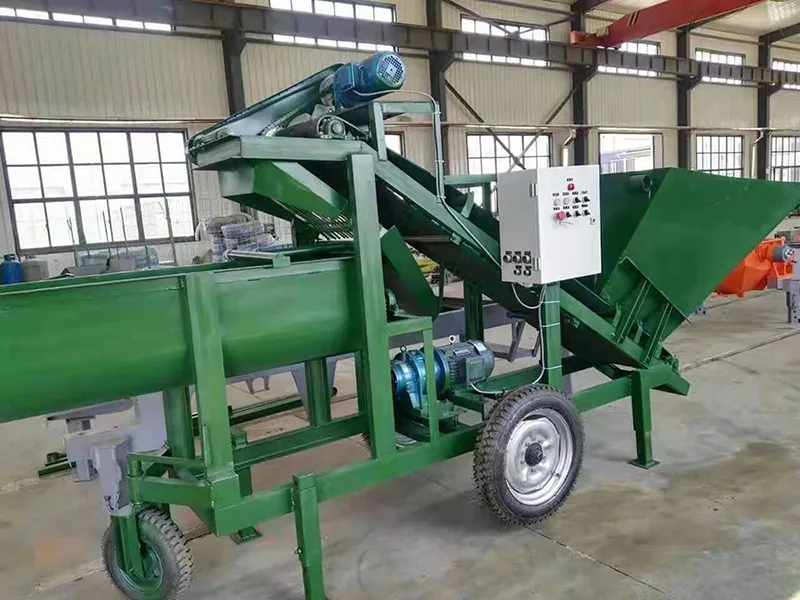
If you’ve been in the flooring or plastering game for more than a week, you know the drill. The biggest headache isn’t the material price or the client’s demands—it’s the consistency of the pour.
Relying on a crew with buckets and hand-mixers is a gamble. One guy gets tired and adds too much water; another forgets to mix long enough. By 3 PM, your “self-leveling” floor looks like a topographical map of the Himalayas.
If you want to move from small residential patches to high-output commercial contracts, you have to stop thinking about manual labor and start thinking about integrated pumping systems.
The “Cold Joint” Killer
In large-scale floor leveling, speed isn’t just about finishing early; it’s about structural integrity. When you mix manually, you often face the dreaded cold joint—that ugly line where one batch of mortar begins to set before the next one arrives.
An all-in-one Continuous Mortar Mixer + Pump eliminates this entirely. By feeding dry material into one end and getting a steady, pressurized stream out of the other, you maintain a “wet edge” across the entire floor. The result? A monolithic slab that is actually flat, without the ridges and weak points that lead to callbacks.
Labor: Your Biggest Expense, Your Biggest Variable
Let’s talk numbers. To manually mix and pour 1,000 square meters of self-leveling underlayment, you need a small army. You need mixers, runners, and spreaders.
With a PLC-controlled pumping unit, you can typically cut your onsite crew by 40% to 60%. Because the machine handles the heavy lifting—literally pumping the slurry through a hose to exactly where it’s needed—your team can focus on the technical work: gauging and finishing. You aren’t just saving on man-hours; you’re reducing the physical burnout that leads to mistakes.
Precision Under Pressure
Modern mortars and self-leveling compounds are chemically sensitive. They have a narrow “sweet spot” for water content.
This is where mechanical batching beats a human every time. A high-quality mortar delivery pump doesn’t get distracted. It delivers a constant ratio of water to powder, ensuring that the slump (the flowability of the mix) remains identical from the first square meter to the last. If you’re working on a tight job site with strict specs, that level of repeatability is your best insurance policy.
Reaching the Hard Places
One of the most underrated advantages of a pumping system is reach. Lugging bags of sand or heavy buckets up a flight of stairs or into a cramped urban basement is a logistics nightmare.
A rugged, compact concrete pump allows you to keep your heavy equipment in the staging area and simply run a hose to the work zone. Whether you’re working on a 5th-floor renovation or a deep foundation, the material arrives fresh, well-mixed, and ready to flow.
The Bottom Line: ROI
Buying a professional pumping setup isn’t an “expense”—it’s a pivot. It’s the difference between chasing $5,000 jobs and bidding on $50,000 projects. When you can guarantee a mirror-smooth, professional finish in half the time it takes your competitors, you stop competing on price and start winning on performance.